Piatnik Musical Notes
by Piatnik Vienna
"A stunning arrangement of sheet music — intricate, elegant, and a joy to assemble piece by piece."
Puzzle Pieces
1,000
Framed Size
21" × 30½" (framed)
Puzzle Size
26.5" × 17.4" assembled
Framed Original
One-of-a-kind collector piece
$100
The completed puzzle, professionally framed and ready to hang. Includes certificate of authenticity and artist statement.
Puzzle Copy
Build it yourself
$30
High-quality print on premium puzzle stock. Same artwork, your own journey. Ships within 5–7 business days.
Questions about this piece? Contact Deb directly
The Story Behind the Puzzle
Piatnik Musical Notes
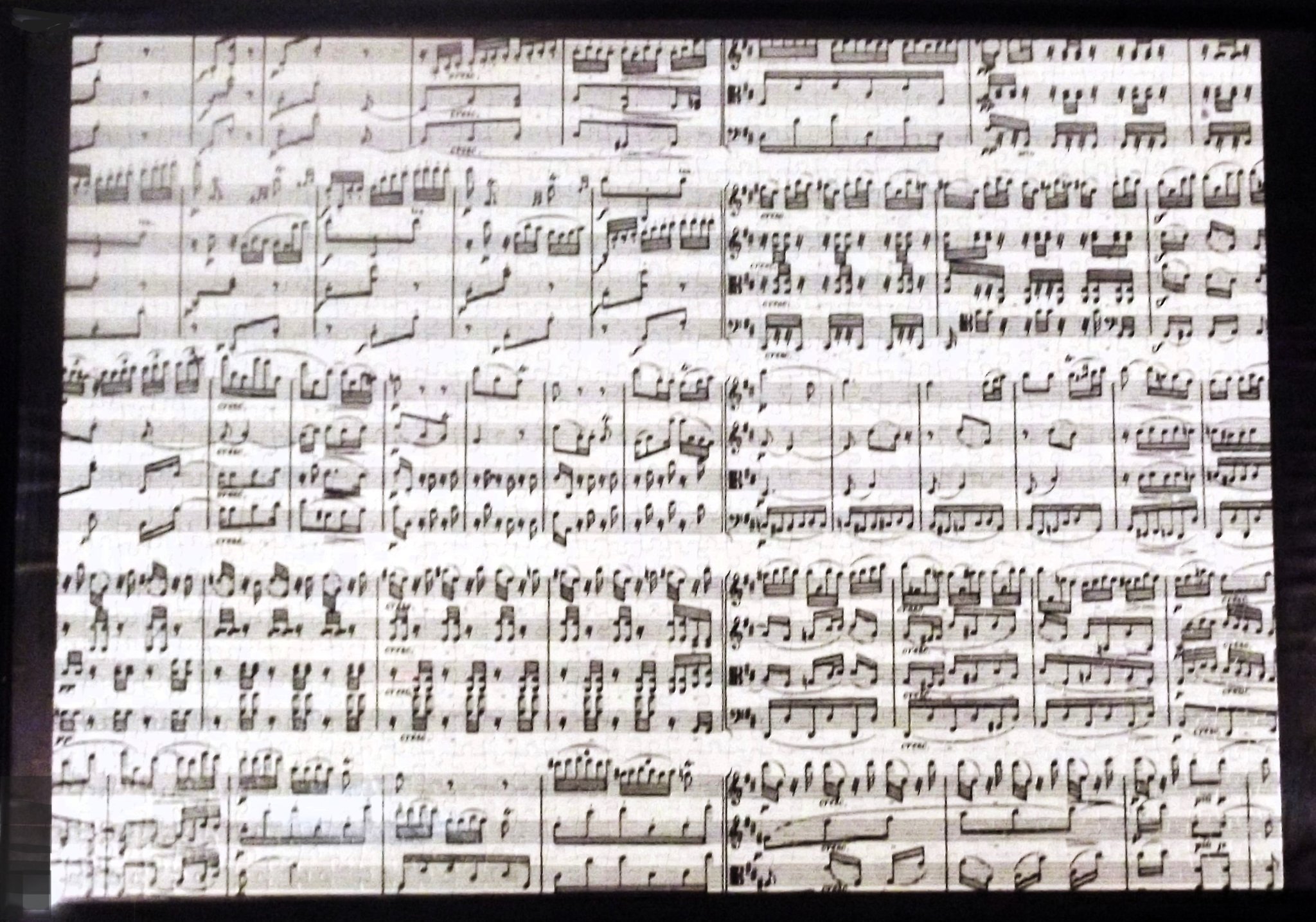
A crisp grid of musical symbols stretches across the page with architectural clarity. This composition of musical notation unfolds like a visual tapestry of rhythm and structure. Dense staves sweep across the page in elegant black ink, each line alive with intricate note clusters, expressive markings, and shifting harmonies. The layout evokes the disciplined beauty of classical manuscript work — precise, balanced, and richly layered — creating an image that feels both intellectual and artistic. It's the kind of score that invites you to lean in, trace the patterns, and imagine the music rising from the page.
When I first saw this puzzle, it visually appealed to me because it brought back some fond memories. It reminded me of when I played the clarinet as a child.
I started to learn to play the clarinet in elementary school — I was in the 5th grade at Noble Elementary and Junior High School in Detroit, Michigan. I learned the basics and excelled at reading and playing music. On the Junior High level, I played in the school's concert band. Upon graduation from middle school, I was first chair of the Clarinet section in the band. I recall lugging that clarinet back and forth to school, practicing every day for hours, reading and memorizing songs. The graduation ceremony's signature song, Pomp and Circumstance, comes to mind. I was really good playing the clarinet — skilled enough to sit in 1st chair in the clarinet section of the band.
The term "first chair" designates the principal player of a specific instrument section in a band or orchestra, typically the most skilled and experienced musician in that group. This position is not just about sitting at the front; it symbolizes musical excellence, leadership, and responsibility. First chair musicians often guide their section, set the tone for rehearsals, and ensure cohesion during performances.
After graduating from junior high and entering high school, I was immediately accepted into the high school concert band. As a freshman, I had to start at the bottom of the clarinet section — 3rd row. I remember being a bit upset to be placed in such a lower position, as I thought my skill level was sufficient to garner me a higher placement. I felt crushed, until I met and observed the more skillful clarinetists. I remember twin sisters who were also freshmen immediately positioned in 1st row, 1st chair. These two girls were prodigies — remarkably gifted and talented.
Cass Tech's concert band was (and still is) considered one of the most elite bands in Michigan — a Class AA band under the Michigan School Band and Orchestra Association. In state competitions, Cass Tech's bands always placed in Division 1 (Superior) status because of the students' ability to play on a professional and collegiate level. We played with rhythmic complexities — irregular meters and shifting patterns — with extreme agility and high endurance.
This puzzle reminded me of the sheet music from concerts I played: Johann Stamitz's Clarinet Concerto in B Flat Major, Percy Grainger's Lincolnshire Posy, R. Vaughan Williams's Toccata Marziale, and works by composers like Hindemith, Husa, and Persichetti.
This puzzle was one of the hardest I've put together. Every piece is black and white in some form or another. It took a while to develop a strategy, but I finally figured out the differences between pieces — it took me back to learning notes on sheet music. Music is written on a staff: five lines, four spaces, within bars. Notes are placed above the top line, on a line, between two lines, or below the bottom line. Once I figured this out, it was simply a matter of sorting by staff position.
After completion, I wondered if this sheet music actually represents a known piece of music — and discovered that it does not. It is simply musical phrases randomly placed together. It reads less like a score and more like a piece of modern design: sharp, rhythmic, unmistakably contemporary. If you are a musician, play the notes and see what it sounds like to you.
What's Included
Certificate of authenticity
Story of the puzzle-making process
Free shipping (US)
Puzzle Copy Includes
1,000 premium puzzle pieces
Artist story booklet
Sturdy collector box
Poster reference print
Ships in 5–7 business days
About the Artist
Piatnik Vienna
Piatnik Vienna is one of the world's oldest and most respected puzzle and game manufacturers, founded in Vienna, Austria in 1824. Known for their exceptional quality and beautiful imagery, Piatnik puzzles are treasured by collectors and enthusiasts worldwide.
Visit Artist Website